
Acid wash is one of the most recognizable wash effects in streetwear. It creates a faded, cloudy, and irregular color pattern that gives garments a vintage, worn-in look.
From oversized T-shirts and heavyweight hoodies to sweatpants and matching sets, acid wash can help a basic style feel more expressive and premium. However, it also requires careful development because every garment may come out slightly different after washing.
This guide explains what acid wash is, how it is used in apparel production, which fabrics work best, and what brands should consider before developing acid wash clothing.
What Is Acid Wash?
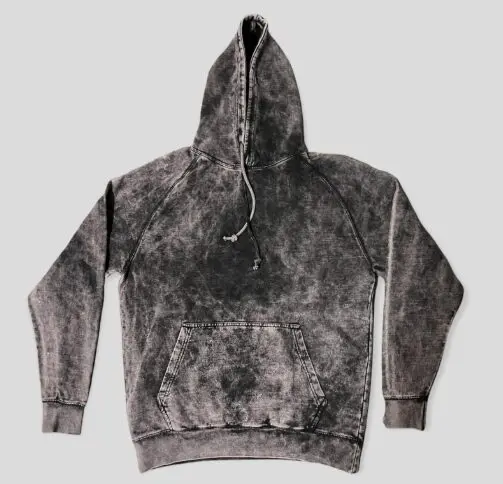
Acid wash is a garment washing technique used to create a faded, high-contrast, vintage-style effect on fabric. Instead of producing a flat solid color, the process removes or lightens parts of the dye unevenly, resulting in a cloudy, marbled, or worn surface.
Although the name includes “acid,” modern garment washing is usually controlled by professional washing factories using specific chemicals, stones, or wash formulas depending on the desired effect. The goal is to create a unique washed appearance while keeping the garment wearable, stable, and suitable for bulk production.
Why Acid Wash Is Popular in Streetwear
Acid wash works especially well in streetwear because the style naturally supports oversized fits, vintage references, and bold surface treatments.
It Creates a Vintage Look
Many streetwear collections are inspired by old band tees, faded workwear, skate culture, and 1990s or Y2K fashion. Acid wash gives new garments a worn-in appearance without requiring years of natural fading.
It Makes Basic Styles Look More Premium
A plain black T-shirt or hoodie can look simple. With acid wash, the same silhouette becomes more textured and design-driven.
Each Piece Feels Slightly Unique
One of the strongest appeals of acid wash is that no two garments look exactly the same. The irregular fading gives each piece a slightly different surface pattern.
It Works Well with Oversized Silhouettes
Acid wash is often used on boxy T-shirts, drop-shoulder hoodies, relaxed sweatpants, and heavyweight casual pieces. The washed texture adds depth to large fabric surfaces and prevents oversized garments from looking too plain.
Common Acid Wash Effects
Acid wash can create different visual results depending on the fabric, base color, washing formula, and production method.
High-Contrast Acid Wash
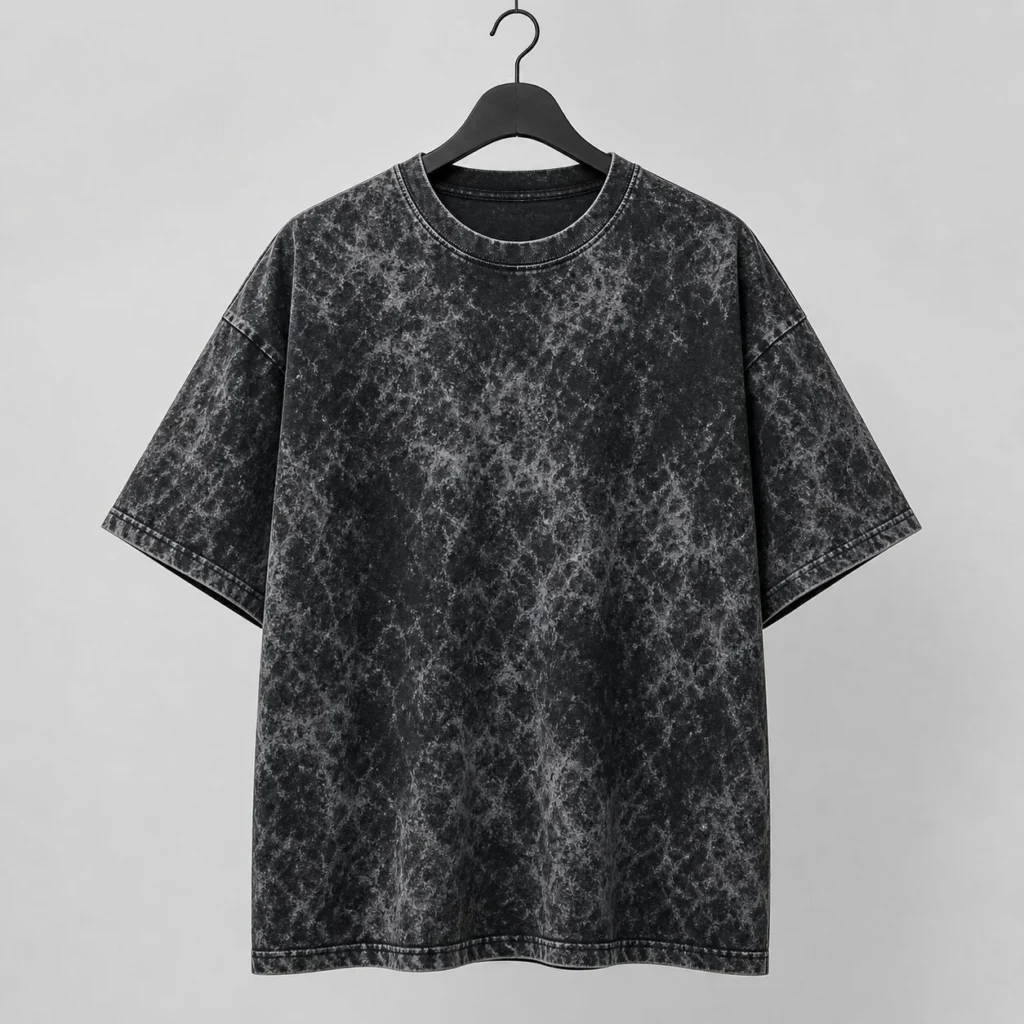
This effect creates a strong difference between dark and light areas. It is often used on black, charcoal, navy, or deep-colored garments.
Soft Vintage Wash
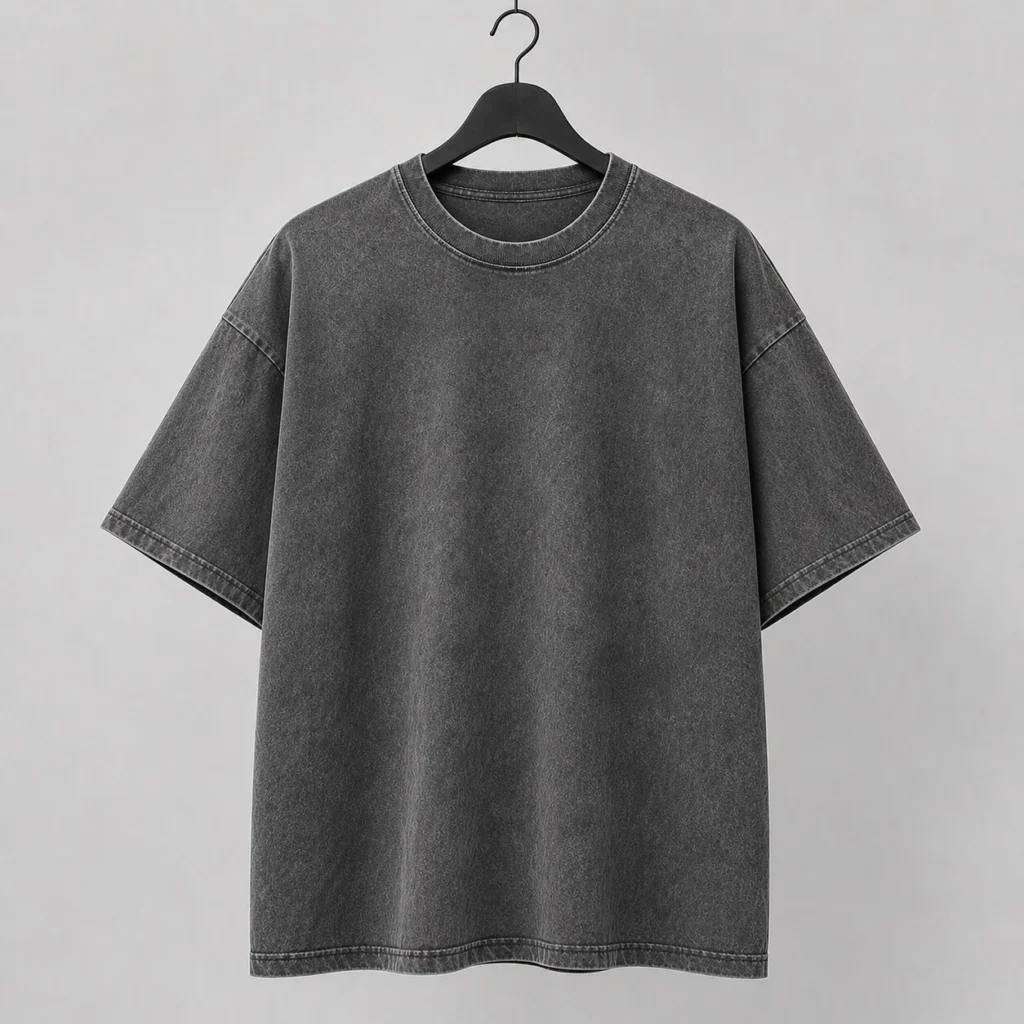
This version is more subtle. The color looks faded and aged, but the contrast is not too strong.
Cloudy or Marble Wash
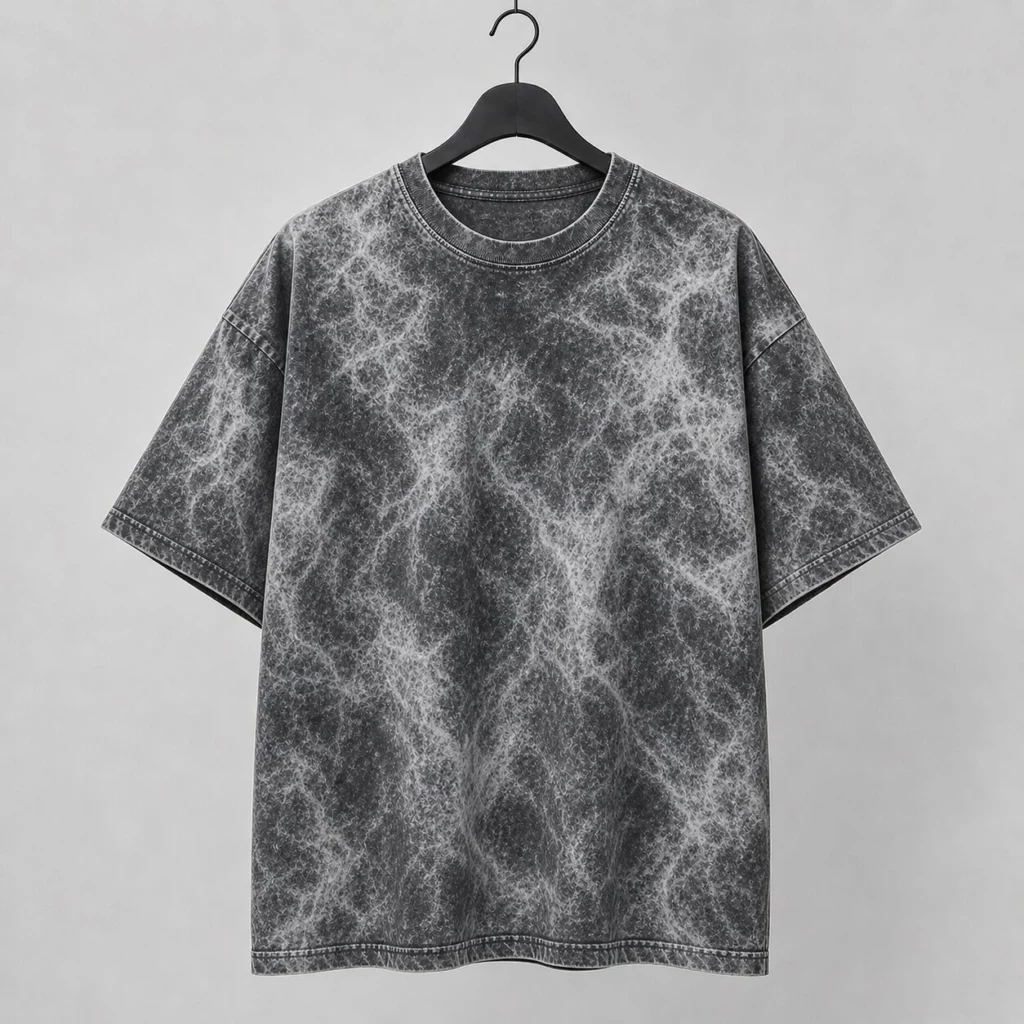
This creates a more visible cloudy texture across the garment surface. It can look artistic and irregular, especially on larger items such as hoodies and sweatshirts.
Washed Black Effect
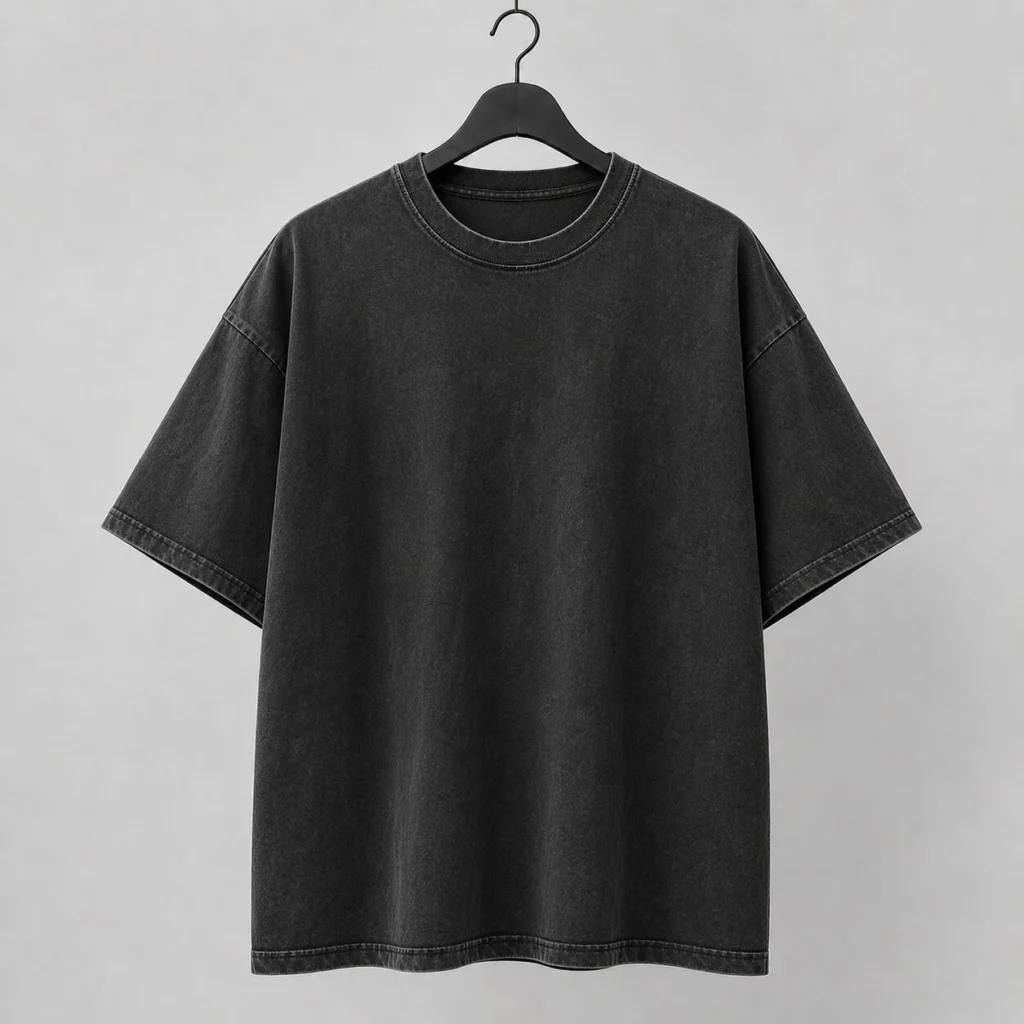
Washed black is one of the most popular acid wash directions. Instead of pure black, the garment becomes faded black, charcoal, or grey-black.
Best Fabrics for Acid Wash Clothing
Not every fabric reacts well to acid wash. Fabric composition, weight, dyeing method, and construction all affect the final result.
100% Cotton Jersey
Cotton jersey is one of the most common choices for acid wash T-shirts. It absorbs dye well and can create a natural faded effect after washing.
For better quality, brands often choose midweight to heavyweight cotton jersey, such as 220gsm, 240gsm, or higher depending on the style.
Cotton French Terry
French terry is often used for sweatshirts, hoodies, and sweatpants. It has a soft looped back and works well for washed casualwear.
The wash effect can look softer compared with fleece, especially when the fabric is not too thick.
Cotton Fleece
Cotton fleece is a strong option for heavyweight hoodies and winter streetwear. The thick structure gives the garment a premium feel, while acid wash adds surface depth.
However, fleece requires careful washing control because the inside brushing, shrinkage, and hand feel may change after washing.
Cotton-Poly Blends
Cotton-poly fabrics may be used for acid wash, but the effect can be less natural than 100% cotton. Polyester does not react to dye removal in the same way as cotton, so the result may be softer or less obvious.
Before using cotton-poly blends, brands should make a wash sample first.
Fabrics Unsuitable for Acid Washing
Some fabrics are more difficult to acid wash or may not create the expected look.
High-Polyester Fabrics
Polyester-rich fabrics usually do not achieve the same faded, vintage effect as cotton. The wash result may look weak, uneven in an unattractive way, or difficult to control.
Very Lightweight Fabrics
Thin fabrics may become weaker after strong washing. They can also twist, shrink, or lose shape more easily
Stretch Fabrics with High Spandex Content
Spandex can be sensitive to harsh washing conditions. If the process is too strong, the garment may lose elasticity or become distorted.
For acid wash streetwear, cotton-based fabrics are usually the safer and more reliable choice.
Acid Wash vs. Mineral Wash
Acid wash and mineral wash are often used in similar contexts, but they are not always the same.
| Feature | Acid Wash | Mineral Wash |
|---|---|---|
| Look | Higher contrast, faded, cloudy | Softer, vintage, dusty |
| Common Use | Streetwear, denim, bold washed effects | T-shirts, hoodies, casualwear |
| Visual Result | More dramatic | More subtle and worn-in |
| Best For | Statement pieces | Everyday vintage basics |
| Production Control | Requires careful testing | Also requires testing, usually softer |
In many markets, the terms are sometimes used interchangeably. However, for production, brands should not rely only on the name. It is better to provide reference photos, target colors, and approved wash samples.
How Acid Wash Is Made in Garment Production
The exact process may vary by factory, fabric, and desired effect, but the basic workflow usually includes several key steps.
1. Fabric or Garment Preparation
Most acid wash streetwear is washed after the garment is sewn. This is called garment washing. The finished T-shirt, hoodie, or sweatpants are washed to create the final surface effect.
This is different from washing the fabric before cutting. Garment washing gives a more natural effect across seams, edges, and garment panels.
2. Dyeing or Base Color Selection
The base color is very important. Darker colors usually create stronger acid wash contrast. Black, charcoal, navy, brown, olive, and dark purple are common choices.
If the base color is too light, the acid wash effect may not be very visible.
3. Washing Treatment
The garment is processed using a controlled wash method to remove or lighten parts of the color. The result depends on time, temperature, chemical strength, garment weight, and machine load.。
4. Rinsing and Neutralization
After washing, garments need to be properly rinsed and treated to remove chemical residue. This step is important for fabric safety, hand feel, and long-term wearability.
5. Drying and Finishing
The garments are dried, shaped, checked, and finished. At this stage, the factory checks color effect, size, shrinkage, fabric hand feel, and overall garment appearance.
Key Production Challenges for Acid Wash Clothing
Acid wash can look simple from the outside, but it is more complex than producing solid-color garments.
Color Variation
Acid wash naturally creates variation. This is part of its appeal, but it can also become a problem if the bulk production looks too different from the approved sample.
Brands should understand that acid wash will not have the same consistency as solid dyeing. The goal is controlled variation, not perfect uniformity.
Shrinkage
Garment washing can affect final measurements. Cotton fabrics, especially heavyweight jersey, French terry, and fleece, may shrink after washing.
This means patterns may need to be adjusted before bulk production to ensure the final size matches the brand’s size chart.
Fabric Damage
If the washing process is too strong, the fabric may become weak, rough, or overly faded. Lightweight fabrics are especially risky
Uneven Results Between Batches
Machine load, garment weight, water ratio, and wash time can all affect the final result. This is why bulk production should follow an approved washing standard as closely as possible.
Print Compatibility
If the garment also includes screen printing, puff printing, DTG, heat transfer, or embroidery, the production order matters. Some prints may crack, fade, or peel if washed after printing.
Prepare Before Developing Acid Wash Clothing
To get a better sample and avoid misunderstandings, brands should prepare clear development information before starting.
Reference Images
Photos are very important for acid wash. Words like “vintage,” “washed,” or “faded” can mean different things to different people.
Fabric Requirements
Brands should confirm the fabric type, weight, and composition before washing. For example:
- 100% cotton jersey, 240gsm
- Cotton fleece, 380gsm
- French terry, 320gsm
- Cotton-poly blend, 280gsm
The fabric choice will directly affect the wash result.
Size Chart
Because acid wash is usually done after sewing, shrinkage must be considered. A clear size chart helps the factory adjust patterns and control final measurements.
Artwork and Print Method
If the garment includes graphics, should confirm:
- Print type
- Print size
- Print positio
- Whether the print should look clean or vintage
- Whether washing happens before or after printing
Approved Wash Sample
For acid wash products, an approved physical sample is very important. Bulk production should be based on the approved sample, not only on digital images.
FAQs About Acid Wash Clothing
Yes, but the production order matters. For clearer and more stable prints, acid washing is usually done before printing.
Yes, it can. Since acid wash is often done after sewing, the garment may shrink or change slightly in shape.
Usually yes. Acid wash requires extra washing treatment, testing, quality control, and sometimes higher fabric loss or stricter inspection.
Conclusion
Acid wash is a strong choice for streetwear brands that want to create vintage-inspired T-shirts, hoodies with more texture and character. The key is not only choosing the right wash effect, but also controlling the fabric, sizing, shrinkage, print method, and bulk consistency from the beginning.
If you are planning to develop acid wash streetwear for your brand, feel free to contact us. Our team can support you with fabric sourcing, sample development, wash testing to help turn your design idea into a finished collection.