
Streetwear brands now use more graphic application methods than ever, and heat transfer printing has become an important option among them. It offers speed, flexibility, and strong visual precision. That makes it especially useful for low-MOQ production, limited drops, brand logo placement, and fast sample development.
Like any decoration method, however, it comes with specific strengths, technical limits, and production requirements.
For brands developing streetwear collections, it is important to understand where heat transfer works well and where it does not before moving into sampling or bulk production.
What Is Heat Transfer Printing?
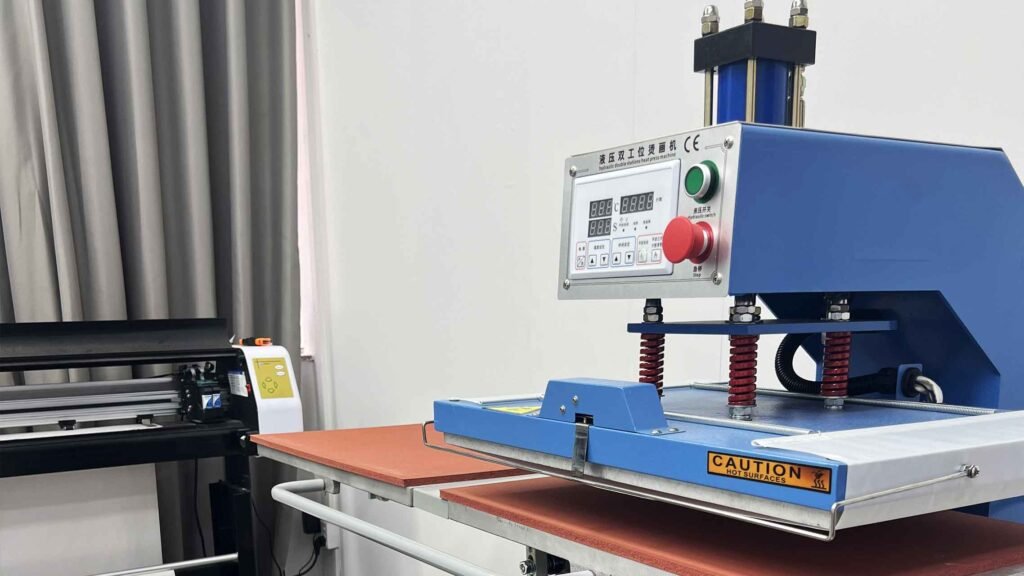
Heat transfer printing is a method of decorating apparel. In this process, a design is first printed onto a specialized carrier, such as film or paper, and then transferred onto the fabric through heat and pressure.
In professional streetwear production, this is not the DIY iron-on method of the past. It is a precision-based process that uses industrial heat presses and advanced adhesives. These materials bond the print to the garment and help it withstand daily wear and repeated washing.
How It Works:
The process relies on three critical variables: Temperature, Time, and Pressure.
1. Printing: The artwork is printed in reverse onto a release film or paper, often with a white under-base for opacity on dark fabrics.
2. Adhesive Application: A hot-melt adhesive powder or liquid is applied to the wet ink.
3. Curing: The carrier is passed through a dryer to set the adhesive.
4. The Transfer: An industrial heat press (typically set between 150°C to 165°C) liquefies the adhesive, forcing the ink to fuse with the textile structure.
Types of Heat Transfer Printing in Streetwear
Not all transfers are created equal. Depending on your design and fabric choice, different technologies offer different results:
- DTF (Direct-to-Film): Currently the gold standard for streetwear. It allows for unlimited colors, incredible detail, and a soft, flexible “hand-feel” even on heavy cotton.
- Plastisol Transfers: These are essentially screen-printed designs on release paper. They offer the classic “thick” streetwear texture and excellent color vibrancy.
- Heat Transfer Vinyl (HTV): Best used for high-visibility accents, reflective logos, or “neon” elements that cannot be achieved with standard ink.
- Sublimation Transfers: Limited to polyester or high-blend fabrics; ideal for all-over print (AOP) technical streetwear but less common for standard heavy-fleece hoodies.
Advantages and Limitations
Heat transfer printing has clear production advantages, but it is not a universal solution.
The Advantages
- Complexity without Cost: Unlike screen printing, where each color adds a screen fee, heat transfers handle complex gradients and photographic details at a flat rate.
- Placement Versatility: Heat transfers can be applied to “difficult” areas where a screen-printing carousel cannot reach, such as hoods, sleeves, or inside neck labels.
- Inventory Efficiency: Brands can print transfers in bulk and apply them to garments only when an order is placed, significantly reducing deadstock risk.
The Limitations
- Breathability: Large, solid “block” prints can create a “sweat patch” effect as they seal the fabric’s pores.
- Hand-Feel: While technology is improving, a very large transfer will always feel slightly heavier than a water-based screen print.
Optimizing Your Tech Packs
To achieve retail-ready results, your design files must be prepared with manufacturing precision.
- Resolution is King: Ensure all non-vector art is at least 300 DPI at the actual print size.
- Vector Over Raster: For logos and typography, use vector files (.AI or .EPS). This ensures crisp edges and perfect scaling.
- Transparency Management: In DTF printing, “glow” effects or semi-transparent “smoke” edges can be tricky. Use “halftoning” for smooth transitions into the fabric color.
- The 2mm Rule: Avoid lines thinner than 1.5pt or 2mm, as they may lack enough adhesive surface area to bond securely during the wash cycle.
Best Use Cases for Streetwear
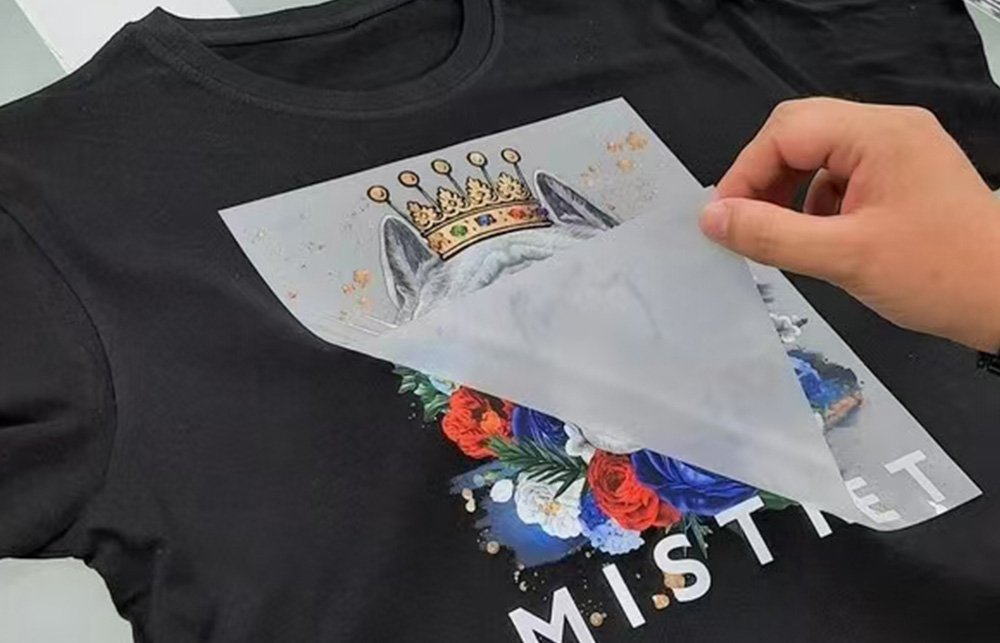
Heat transfer printing excels in the following scenarios:
- small logo placement: Chest logos, hem graphics, sleeve branding, and back neck details often suit transfer printing well because the print area is controlled, the design stays sharp, and the surface feel remains manageable.
- personalization or variable graphics: Numbering, artist collaborations, event capsules, or limited-run drops often involve design variation that would be less efficient with traditional screen setups.
- Test collections :When a brand wants to check demand before committing to larger quantities, transfer-based sampling and short-run production can reduce risk.
- multi-color graphics in smaller volumes:DTG print can also offer a practical path.
- Multi-Fabric Collections: If your drop includes a mix of nylon windbreakers, cotton tees, and polyester tracksuits, heat transfers provide color consistency across all materials.
What to Consider When Cooperating with a Factory
When auditing a manufacturing partner for your heat transfer needs, look beyond the price per unit.
- Equipment Quality: Does the factory use industrial dual-platen heat presses? This ensures consistent pressure that manual “clamshell” presses cannot match.
- Wash Testing: Ask for their ISO 105-C06 (or equivalent) wash test results. A professional factory should guarantee 25–50 washes without significant cracking or peeling.
- Adhesive Sourcing: High-quality, eco-friendly TPU powders ensure the print remains soft and doesn’t become brittle over time.
- Sampling Protocol: A reliable partner will always provide a “strike-off” sample on your specific fabric to test for dye migration (where the fabric color bleeds into the print).
Conclusion
Heat transfer printing has evolved from a utility process into a premium streetwear staple. By leveraging its flexibility, brands can reduce inventory risk while pushing the boundaries of graphic design.
Looking to elevate your next collection? Our facility specializes in high-durability DTF and Plastisol transfers tailored for heavyweight streetwear. [Contact us today] to discuss your Tech Pack