
Choosing the right fabric printing method is what turns a digital design into a perfect finished product . A pattern may look perfect on screen, but the final result depends on how the printing technique works with the fabric,texture, and garment style.
The wrong method can lead to dull colors, a stiff hand feel, poor stretch, or prints that fade after repeated washing.
This guide explains the main fabric printing methods, how they work, what fabrics they are suitable for, to help you make an informed decision.
Quick Comparison
| Printing Method | Best Fabric Match | Order Volume | Color Complexity | Texture / Hand-Feel |
| Digital (DTG/R2R) | Natural Fibers (Cotton/Linen) | Low to Medium | High (Gradients, Photos) | Exceptionally Soft |
| Dye Sublimation | Polyester & Synthetics | Low to High | High (Vibrant, All-over) | Zero Texture (Injected) |
| Screen Printing | Cotton, Canvas, Heavy Blends | High to Massive | Low to Medium (Solid Colors) | Noticeable to Thick Layer |
1. Digital Textile Printing (DTG & Roll-to-Roll)
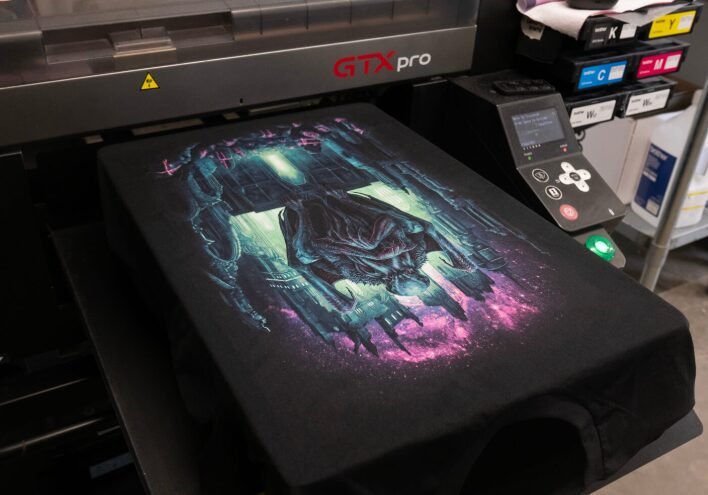
Digital textile printing operates much like your office inkjet printer, but on a massive, highly sophisticated scale. It injects micro-droplets of ink directly into the fabric fibers via advanced printheads.
There are two main configurations: Direct-to-Garment (DTG) for finished items, and Roll-to-Roll (R2R) for continuous yards of fabric.
- The Science: Utilizes specialized aqueous inks (reactive, acid, or pigment) that are cured using heat or steam to bind with the molecules of the fabric.
- Best Materials: 100% Cotton, linen, rayon, bamboo, and silk.
- Color Capability: Unlimited. It effortlessly handles complex gradients, photorealistic imagery, and intricate fine lines.
Pros:
- Infinite Detail: No restriction on color counts or intricate patterns.
- Low Setup Overhead: Ideal for small batches, limited editions, or print-on-demand setups.
- Soft Hand-Feel: Because the ink penetrates the fibers rather than sitting on top, the fabric retains its natural drape and breathability.
Cons:
- Speed & Scaling Limitations: While setup is fast, the actual printing speed per yard is slower compared to analog methods, making it less economical for massive production runs
- Fiber Restrictions: Acid and reactive digital inks require specific fiber types to lock in permanently.
2. Dye Sublimation Printing
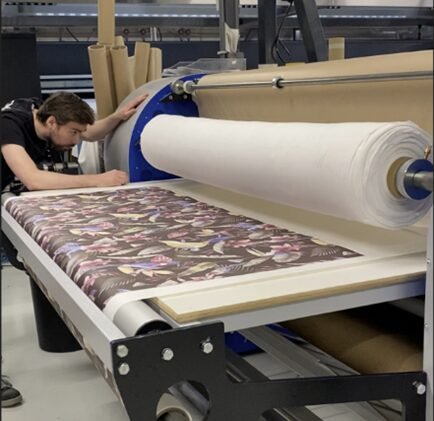
Dye sublimation is a chemical process where solid substance transitions directly into a gas without passing through a liquid state.
In textile printing, your design is first mirrored onto a specialized transfer paper using sublimation inks. A high-temperature heat press (180℃ to 210℃) then forces the ink off the paper and deep into the synthetic fibers.
- The Science: The intense heat causes the polymer fibers of the fabric to open up, while simultaneously turning the ink into a gas. The gas penetrates the open pores of the polymer. When cooled, the pores close, trapping the dye inside the fiber structure.
- Best Materials: 100% Polyester, polyester blends, and polymer-coated synthetics. It will not work on 100% cotton.
- Color Capability: Exceptionally vibrant, continuous tones and full-coverage “all-over” prints.
Pros:
- Unmatched Durability: The design becomes an integral part of the fabric. It will never crack, peel, or wash out.
- Zero Hand-Feel: The print has absolutely no texture, maintaining the exact breathability of the original sportswear performance fabric
Cons:
- Strictly Synthetic: Limited exclusively to polyester or high-polyester blends.
- Ghosting Risks: If the fabric shifts even slightly during the heat press phase, it can cause blurry edges or “ghost” images.
- Not suitable for dark fabrics; works well only on white or light-colored fabrics.
3. Traditional Screen Printing
The undisputed gold standard for high-volume manufacturing, screen printing (or silk-screen printing) is an analog, stencil-based technique.
A mesh screen is created for every individual color in the design. Ink is then pushed through the open areas of the stencil onto the fabric using a squeegee, building the design layer by layer.
- The Science: Thick inks (typically plastisol or water-based) sit as a physical layer on top of the fabric or slightly chemically bond with the surface.
- Best Materials: Highly versatile—works beautifully on cotton, canvas, heavy blends, and most natural fibers.
- Color Capability: Exceptional color accuracy, especially when matching specific Pantone colors. However, it struggle with complex photographic gradients.
Pros:
- Economy of Scale: While the initial setup is time-consuming and costly, the cost per unit plummets dramatically as production volume increases.
- Vibrancy on Dark Fabrics: Because the ink is thick and opaque, it delivers incredibly rich, vibrant colors even on jet-black textiles.
Cons:
- Design Limitations: High color counts mean high setup fees, as every color requires its own screen.
- Texture (Hand-Feel): Plastisol inks leave a distinct, rubbery texture on top of the fabric, which can reduce breathability in large designs.
Which fabric printing method is best?
The best fabric printing method depends entirely on your fabric composition and production volume:
- For Natural Fibers (Cotton, Silk, Linen): Digital Textile Printing is best for intricate, multi-colored designs in smaller batches, while Screen Printing is best for large-scale production of solid-color graphics.
- For Synthetic Fibers (Polyester, Nylon): Dye Sublimation is the superior choice, offering permanent, vibrant, and breathable prints that will never crack or peel.
Which Technique Is Best for Your Designs?
To finalize your decision, ask yourself these three filtering questions:
What is the material composition?
If you are designing high-performance activewear, swimwear, or athleisure made of polyester, Dye Sublimation is the clear winner. If you are creating premium streetwear hoodies, luxury linen dresses, or organic cotton tees, look toward Digital Printing or Screen Printing.
How complex is the artwork?
Photographic prints, watercolor illustrations, and hyper-detailed digital art require the precision of Digital Printing. If your aesthetic relies on bold typography, minimalist vector shapes, or specific corporate branding colors, Screen Printing will yield the sharpest, most impactful results.
What is your production scale?
For launching a curated capsule collection with varied designs, Digital Printing mitigates financial risk by eliminating setup costs. However, once a specific design scales into mass production, transitioning to Screen Printing is paramount for optimizing your margins.
By aligning your creative vision with the technical strengths of these printing methodologies, you ensure that the final product looks exactly as spectacular in reality as it did on your screen.