
In clothing production, many problems do not start on the sewing line. They often begin much earlier, when a design idea is not clearly translated into production details. A sketch, product photo, or reference sample can show the general look of a garment, but it may not explain the measurements, fabric, trims, stitching clearly enough.
This is where a clothing tech pack becomes important. It works as a detailed production document that helps turn a design concept into something a manufacturer can quote, sample, source, produce, and inspect.
In this article, we will explain what a clothing tech pack is, what it should include, and why it plays such an important role in sampling and bulk production.
What Is a Clothing Tech Pack?
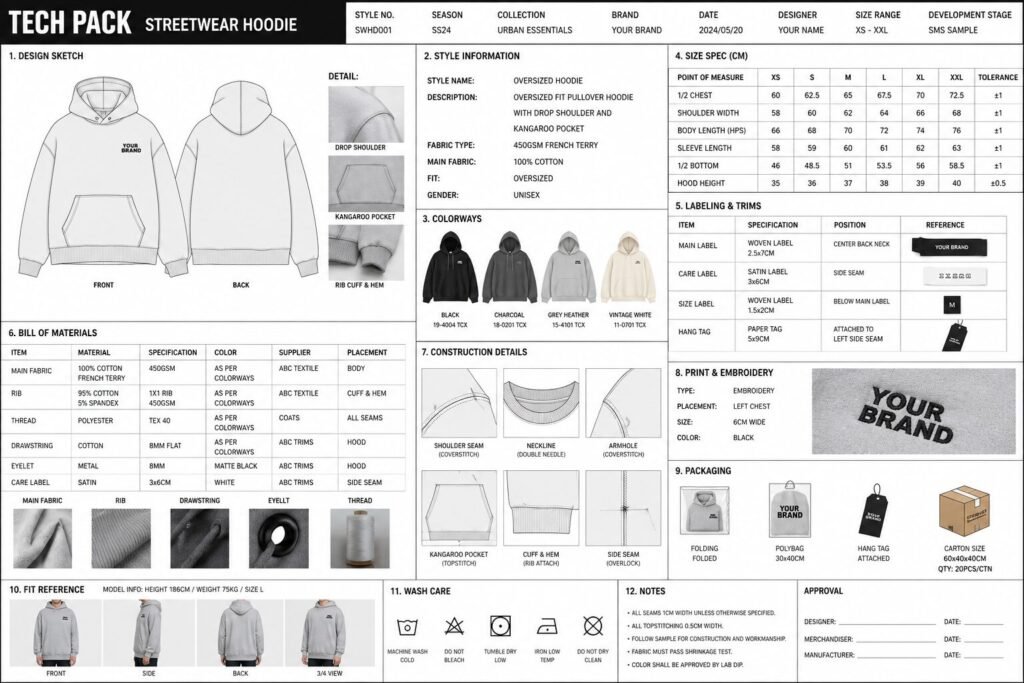
A clothing tech pack is a technical document that explains how a garment should be made. It gives the factory clear instructions about design, measurements, materials, trims, construction details, labels, packaging, and sometimes grading or production requirements.
Many brands think of a tech pack as just a design file, but it is more than that. A good tech pack connects the creative idea with the actual production process. It helps turn a concept into a physical garment that can be sampled, revised, approved, and produced.
For manufacturers, the tech pack is the main reference during sampling and bulk production. For brands, it helps protect design consistency, control costs, and reduce misunderstandings.
Why a Clothing Tech Pack Is Important
A clothing tech pack makes communication much more efficient. Without one, the factory has to guess many details: fabric weight, stitching type, garment measurements…
When these details are unclear, problems usually appear during sampling. The sample may look different from the brand’s expectation,or the production cost may change after more details are confirmed.
From my experience, a clear tech pack helps in three major ways:
- It reduces sample revisions.
- It helps the factory quote more accurately.
- It keeps production details consistent from sample to bulk order.
What Should Be Included in a Clothing Tech Pack?
A tech pack can be simple or very detailed, depending on the product. However, most complete clothing tech packs include the following sections.
Design Sketches
The first part of a tech pack should show the garment clearly. This usually includes front and back technical drawings, and sometimes side views or close-up detail drawings.
I recommend using flat sketches rather than only lifestyle photos. Photos are helpful for style reference, but flat sketches show the structure of the garment more clearly.
For example, if the garment has special seams, panels, straps, pockets, openings, or adjustable details, these should be visible in the technical drawing.
Bill of Materials
The bill of materials, often called BOM, lists all materials used in the garment. This includes main fabric, elastic, zippers, buttons, drawstrings, labels, and packaging materials.
For fabric, I usually suggest including fiber content, weight, stretch level, color, and any special treatment.
Measurements and Size Spec
The measurement chart is one of the most important parts of a clothing tech pack. It tells the factory the exact garment measurements for each size.
Common measurement points include chest, waist, hip, body length, sleeve length, inseam, shoulder width, rise, leg opening, or strap length, depending on the garment type.
I also recommend adding a tolerance for each measurement. For example, a tolerance of ±1 cm may be acceptable for some casualwear measurements, while tighter control may be needed for swimwear, activewear, or fitted garments.
Construction Details
Construction details explain how the garment should be sewn and finished. This section is especially important when the design has special workmanship.
It can include seam types, stitch types, edge finishing, waistband construction, pocket construction, zipper attachment,bartacks…
These details directly affect comfort, durability, appearance, and production cost.
Color and Print Information
If the garment includes colors, prints, embroidery this information should be clearly included.
For solid colors, Pantone numbers or physical color standards are helpful. For prints, the factory usually needs the artwork file, repeat size, print placement, and color reference.
I always suggest confirming whether the print is all-over, engineered, placed, or panel-based. This affects fabric usage, cutting, pattern matching, and cost.
Label and Packaging Details
Labels and packaging are often left until the last minute, but they should be part of the tech pack if the brand wants a complete production reference.
This section may include:
- Main label
- Size label
- Care label
- Hangtag
- Barcode sticker
- Polybag
For export orders, care label content is especially important because different markets may require different fiber content, washing symbols, country of origin, or compliance information.
Fit Comments and Sample Revisions
A good tech pack should not stay fixed forever. During sample development, it should be updated after each fitting or revision.
When customers review samples, we usually advise them to keep comments specific. Instead of writing “make it better,” it is more useful to say “reduce waist by 2 cm,” “raise neckline by 1.5 cm,” or “change sleeve opening to 18 cm.
Clear revision notes help the factory correct the sample accurately and avoid repeating the same problem in the next round.
Common Mistakes in Clothing Tech Packs
Many new brands do not need a perfect tech pack at the beginning, but there are some common problems that can slow down development.
One common mistake is only sending inspiration photos without measurements or construction details. Reference photos help explain the style direction, but they cannot replace technical information.
Another issue is using unclear fabric descriptions. For example, “soft fabric” is not specific enough. It is better to provide fabric composition, weight, stretch, texture, and intended hand feel.
We also see brands forget to update the tech pack after sample changes. This can create confusion later because the approved sample and the original tech pack no longer match.
Do You Need a Tech Pack Before Contacting a Manufacturer?
A tech pack is very helpful, but it is not always required at the first conversation.
If you already have a complete tech pack, the manufacturer can review the style, estimate cost, and give more accurate feedback. If you do not have one, you can still start with reference images, target fabric, size range, order quantity, and any key design requirements.
However, before moving into sampling or bulk production, the garment details should be organized into a clear document.
Conclusion
A clothing tech pack is not just a document for designers. It is a practical production tool that helps a garment move from idea to sample and from sample to bulk order.
If you don’t yet have a technology package, don’t worry. Just send us reference images and ideas, and our team will help you organize all the production information to ensure a perfect implementation of your design and maintain consistency.
FAQ
The most important parts are usually the technical drawings, bill of materials, size spec, and construction details. These sections directly affect sampling accuracy and production consistency.
A tech pack is usually created by a fashion designer, technical designer, product developer, or brand team. Some manufacturers can also help organize production details if the brand provides enough design information.
For simple styles, a basic tech pack may be enough. For custom designs, fitted garments, swimwear, activewear, or products with special construction, a detailed tech pack is much more important.