
Embroidery and patch details can quickly change how a streetwear piece feels. A plain hoodie, jacket, cap, or cargo pant may look simple at first, but the right detail can make it feel more finished, and recognizable.
These aren’t just design choices; they are powerful tools that change how people perceive the worth of a garment. Here is exactly how these textured details add real value to streetwear production.
Why Embroidery and Patches Matter in Streetwear
Streetwear thrives on small but memorable details. A chest logo, a sleeve badge, a back patch, or even a tiny waistband label can become the main identity of your product.
Luxury Texture
When someone looks at a clothing rack or opens a package, their eyes are drawn to contrast. Flat screen prints are great, but they lack dimension.
- Embroidery uses tight, raised stitching that catches the light and physically stands out from the fabric.
- Patches (whether woven, chenille, or leather) add an entirely separate layer of material on top of the garment.
This three-dimensional effect creates an instant sense of quality. When a customer runs their fingers over a thick, raised embroidered logo or a fuzzy chenille patch, their brain instantly registers: “This took time and effort to make.” That physical sensation is something a flat print just can’t mimic.
Durability
Streetwear is meant to be worn, skated in, washed, and lived in. One of the biggest complaints people have with cheap clothing is that the graphics crack, peel, or fade after just three trips through the washing machine.
Embroidery and patches solve this problem completely.
Why it lasts: Threads are woven directly into the fabric, and patches are securely stitched down. They won’t peel off in the dryer, and they never crack over time.
Even when the cotton hoodie itself ages and fades beautifully, the embroidery stays sharp and intact. This means the garment stays in a customer’s closet for years, proving its worth over and over again..
Makes Simple Designs Look Intentional
You don’t need a massive, colorful graphic to make a statement. In fact, a lot of the most successful streetwear pieces are incredibly minimalist.
Think about a small, 2-inch logo on the left chest of a hoodie. If that logo is just screen-printed, it can look a bit lazy or cheap. But if that exact same 2-inch logo is done in a tight, high-density satin stitch, it suddenly looks luxury.
Using embroidery allows you to keep your designs clean and simple while still making sure the final product looks expensive and well-thought-out.
When Embroidery Works Best

Embroidery looks its best when the artwork is clean and clear. Small icons, simple lettering, and clean line work always turn out better than super complex graphics.
Great spots for embroidery include:
- Left chest on hoodies and sweatshirts.
- Sleeve hits on long-sleeve tees.
- Back neck placements on jackets.
- Small lettering on the front or side of caps.
- Pocket or waistband details on pants.
Pro Tip: Always review your artwork at its actual size before making a sample. If the text is hard to read on your computer screen, it will be even harder to read once it’s stitched into fabric.
What Can Go Wrong?
Embroidery has its limits, and things can go wrong if you aren’t careful:
- If the stitch count is too dense, the fabric will bunch up and pucker around the design.
- If the lettering is too small, the words will turn into an unreadable blur.
- If the fabric stretches too much during sewing, the artwork will look warped and distorted.
When to Use Patches
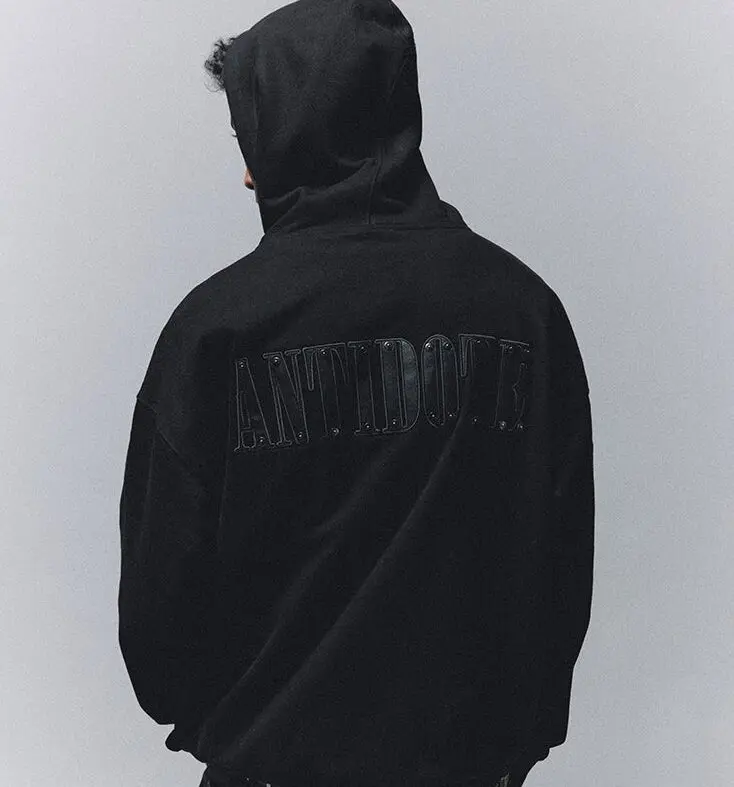
Patches give you a completely different look and feel compared to regular embroidery. Since they are made separately and then sewn onto the garment, they give you massive freedom with materials, borders, textures, and thickness.
Common Patch Types in Streetwear
- Woven Patches: Best for super detailed artwork and sharp, tiny lettering. Great for sleeve badges and clean pocket labels.
- Embroidered Patches: These have a thicker, classic surface. They are perfect for bold icons and workwear-style jackets.
- Chenille Patches: These have a soft, fuzzy, raised texture. They are the go-to choice for varsity jackets, heavyweight hoodies, and retro sports styles.
- Rubber or Silicone Patches: These give a modern, futuristic look. They look amazing on nylon jackets, technical outerwear, and windbreakers.
- Leather (or Faux Leather) Patches: These feel more mature and premium. They work perfectly on denim, beanies, waistbands, and heavy canvas jackets.
Patch Weight Matters
Patch weight is one of the most important production points. If the patch is too heavy for the fabric, it may sag, curl, or pull the garment out of shape.
This is easy to miss on a flat table. The problem becomes clearer when the garment is worn or washed.
Fabric Choice Affects the Final Result
Fabric behavior has a massive impact on how your embroidery and patches turn out. The exact same design can look incredibly clean on one fabric and totally messy on another.
- Easy to work with: Heavy fleece, cotton twill, canvas, denim, and structured, heavy jersey. These fabrics are stable and hold stitches perfectly.
- Need extra testing: Thin t-shirt jersey, ribbed fabrics, lightweight nylon, and anything with a lot of stretch.
Dealing with Stretch Fabrics
Stretch fabrics love to move around while the embroidery machine is working. This can cause the design to look uneven or warped once it’s done. Also, if the stitch density is too high, it will make that part of the clothing feel stiff and uncomfortable.
If you are embroidering on stretchy fabric, always test it twice: once while the fabric is relaxed, and once while it is gently stretched.
Let’s Talk About Costs
Yes, embroidery and patches add to your production costs—but it’s not just about the size of the design. Complexity, machine time, materials, and handling all play a part.
Sometimes, a large but simple embroidery design can be cheaper and easier to make than a tiny design with microscopic lettering. Similarly, a small rubber patch might look cheap to make, but it requires a custom mold fee upfront.
What Drives Embroidery Costs?
Embroidery cost is mostly about stitch count and machine time. More stitches mean the machine has to run longer, and complex details mean workers have to check the quality more often.
- Total stitch count.
- Number of thread colors used.
- How complex the artwork is.
- How hard the placement is (placing embroidery near seams, pockets, or curved areas takes way more time and manual handling).
What Drives Patch Costs?
Patch cost depends on the material, size, shape, and how it gets attached to the clothing.
- The material (chenille and rubber are usually pricier than standard woven options).
- The overall size.
- The border finish (merrowed borders vs. clean laser-cut edges).
- The sewing method used to attach it to the garment.
Remember: the most expensive patch is not always the best choice. Pick what works best for the design and the fabric
Embroidery vs. Patches: How to Choose?
Both options add massive value, but they do different jobs:
- Choose Embroidery when you want the design to feel like it is built directly into the garment. It’s clean, direct, classic, and lasts forever. Perfect for small logos, clean text, and subtle branding.
- Choose Patches when you want the detail to have a strong presence and pop out. They bring a whole new material into the mix and create a cool visual break. Perfect for big statement graphics, team badges, or varsity vibes.
Some of the best streetwear pieces actually use both. For example, you can do a small, clean embroidery logo on the front chest of a hoodie, and slap a massive, high-texture chenille patch on the back.
Conclusion
At the end of the day, creating great streetwear isn’t just about the graphic you design—it’s about how you execute it.
Investing in high-quality embroidery and patch details is one of the smartest moves you can make during production. It instantly elevates the look, guarantees the garment will last for years, and gives the clothing a premium weight that customers can feel the second they pick it up.