
When developing a clothing collection, fabric weight is one of the first details brands need to consider. It affects how a garment feels, drapes, fits, washes, and performs in different seasons. One of the most common ways to measure fabric weight is GSM.
But choosing the right GSM is not simply about picking the thickest fabric. The best choice depends on the garment type, fabric composition, fit, season, and target customer.
This guide explains what GSM means in fabric and how clothing brands can use it to choose the right fabric weight for different types of apparel.
What Does GSM Mean in Fabric?
GSM stands for grams per square meter. It tells you how much one square meter of fabric weighs.
For example, a fabric with 180 GSM means one square meter of that fabric weighs 180 grams. A 300 GSM fabric is heavier than a 180 GSM fabric, but that does not automatically mean it is better.
Think of GSM as a quick reference point when comparing fabrics:
- Lower GSM usually means the fabric is lighter, thinner, and more breathable.
- Medium GSM often gives a balanced feel for everyday clothing.
- Higher GSM usually means the fabric is heavier, warmer, and more structured.
However, GSM only measures weight. It does not tell the full story of fabric quality. Two fabrics with the same GSM can still feel different depending on the fiber content, knit structure, stretch, finishing, and washing treatment. That is why GSM should be used as a starting point, not the only standard for choosing fabric.
Why Fabric Weight Matters?
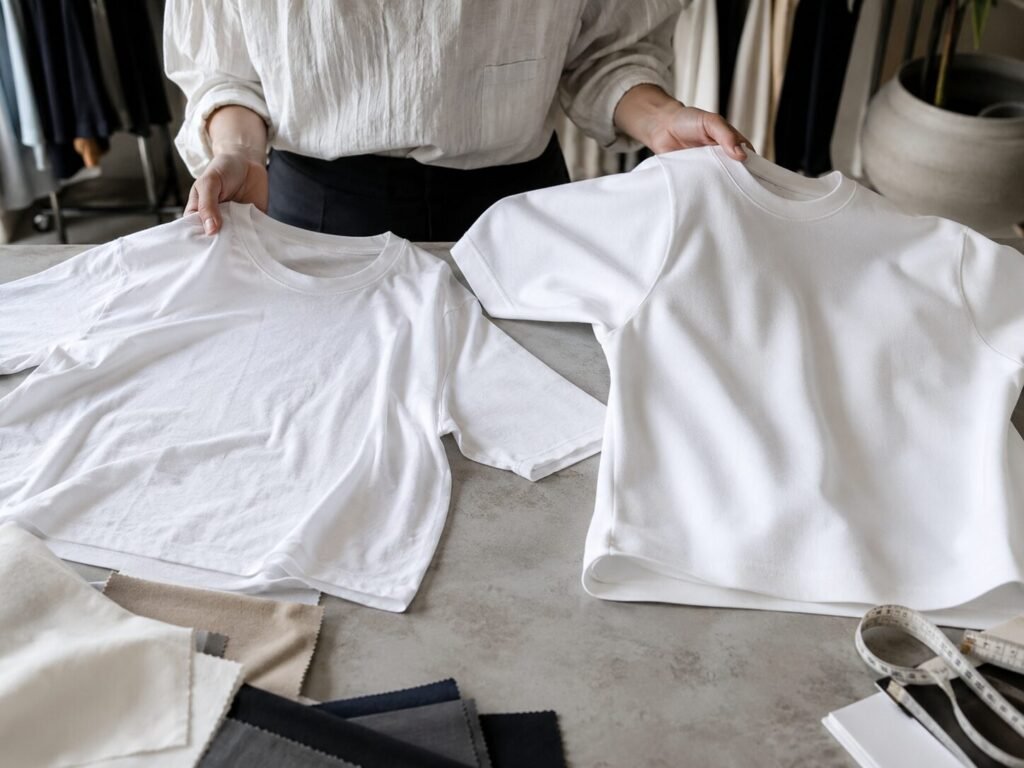
Fabric weight affects more than how thick a material feels in your hand. In clothing production, GSM can influence how a garment looks, fits, performs, and feels after repeated wear.
Opacity
Lower GSM fabrics can be more lightweight and breathable, but they may also be more transparent, especially in white, pastel, or light-colored garments. For T-shirts, dresses, leggings, and fitted styles, opacity is an important detail to check before production.
Drape
Fabric weight changes how a garment falls on the body. Lighter fabrics usually create a softer, more fluid drape. Heavier fabrics tend to hold their shape better and create a more structured look.
Durability
Higher GSM fabrics often feel more substantial and may offer better resistance to daily wear. Mid-weight and heavyweight garments often survive more wash cycles and resist pilling, tearing, or fading compared to ultra-light fabrics.
Seasonality
Lighter GSM fabrics are more breathable and sweat-wicking, ideal for hot summers. Meanwhile, heavier GSM garments provide warmth and insulation during colder months, helping you maintain comfort throughout the year.
Cost and production planning
Heavier fabrics often use more yarn, which may increase fabric cost and shipping weight. For bulk production, choosing the right GSM helps brands balance quality, comfort, price, and target market positioning.
Recommended GSM by Clothing Type
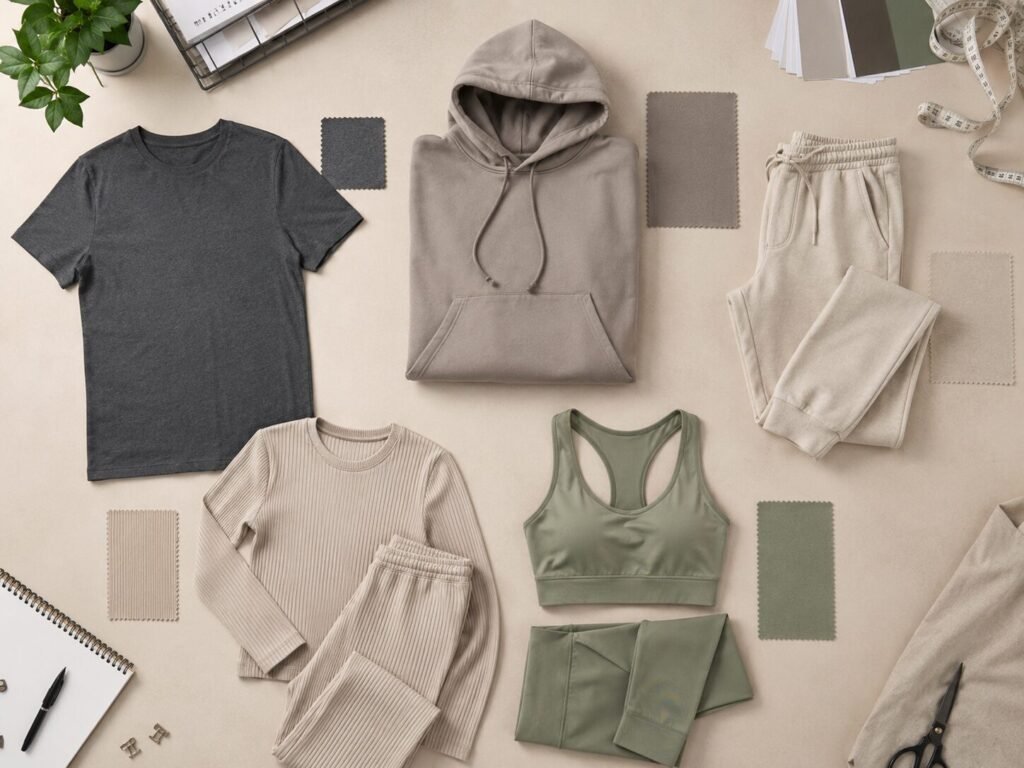
To help you navigate the sourcing process, here is a breakdown of the standard GSM ranges used by professional manufacturers for various apparel categories.
T-Shirts
- Lightweight (120–160 GSM): Ideal for Summer tees, breathable basics, promotional T-shirts
- Mid-weight (160–200 GSM): Everyday casualwear, brand basics. This range offers a balance of durability and breathability.
- Heavyweight (220–280 GSM): Popular for “streetwear” brands. These tees have a structured, boxy fit and a premium, substantial hand-feel.
Hoodies and Sweatshirts
- Sweatshirt (220–320 GSM:Spring/fall layering, casualwear
- Mid-weight (280 – 320 GSM): Suitable for spring/autumn collections or “all-season” hoodies.
- Heavyweight (350 – 450 GSM): The gold standard for premium streetwear. These provide excellent warmth and a high-end, structured silhouette.
Sweatpants and Joggers
- Standard (250 – 300 GSM): Common for lightweight leisurewear.
- Premium (320 – 400 GSM): Offers better shape retention and “warmth-to-weight” ratio, preventing the fabric from sagging at the knees over time.
Dresses and Loungewear
- Fine Knits (120 – 220 GSM): Used for jersey dresses or lightweight lounge tops that require a soft, flowing drape.
- Structural Knits (180 – 280 GSM): Better for fitted dresses or heavier loungewear where you want to minimize visible panty lines (VPL) and provide more “hold.”
Activewear
- Performance Tops (140 – 200 GSM): Moisture-wicking, ultra-light fabrics for running and high-intensity training.
- Leggings and Compression (220 – 320 GSM): Requires a higher GSM combined with high Spandex content to ensure “squat-proof” opacity and muscle support.
How Fabric Composition Affects GSM
Fabric composition can influence GSM, but it is not the only factor. GSM is also affected by yarn thickness, knit or weave density, fabric construction, and finishing treatment. This is why two fabrics with the same GSM can still feel very different.
Fabric Composition:
- Synthetic Fibers (Polyester, Nylon): These often result in higher GSM due to their density and structural strength, often used in thicker, warmer, or durable materials.
- Natural Fibers (Cotton, Linen): These tend to be lighter, offering lower GSM options that are airy and ideal for summer apparel. However, densely woven cotton can still have a high GSM.
- Wool: Naturally heavier, wool contributes to higher GSM values, making it ideal for winter clothing and structured garments.
- Blends: Combining fibers can balance the comfort of natural fibers with the weight and durability of synthetics.
Important Distinctions:
- GSM vs. Thickness: A thick fabric can have a lower GSM if it is loosely woven, while a thin, densely packed fabric can have a high GSM.
- Weaving Type: 200 GSM in a knit fabric behaves differently than 200 GSM in a woven fabric.
How to Choose the Right GSM?

Choosing the right GSM becomes easier when you connect fabric weight with the product’s purpose.
1. Garment category
The product type should guide the first fabric selection. A summer T-shirt, heavyweight hoodie, dress, and pair of leggings all need different fabric weights. Start with the garment category, then narrow the GSM range from there.
2. Consider the target season
For summer clothing, lighter GSM fabrics are usually more comfortable.
For winter clothing, medium-heavy or heavyweight fabrics may be more suitable.
If the product is designed for year-round use, a medium GSM range often works best.
3. Fit and Silhouette
Oversized T-shirts and streetwear hoodies often need more structure, so a higher GSM may work better. Slim-fit tops, draped dresses, and soft loungewear may need lighter or more fluid fabrics.
4. Brand Positioning
A basic collection may use standard GSM fabrics to balance comfort and cost. A premium streetwear line may use heavier fabrics to create a more substantial hand feel.
The right GSM should support your brand positioning, not just the product category.
Common Mistakes When Choosing Fabric GSM
Even experienced brands can choose the wrong fabric weight if they only look at the number. Here are some common mistakes to avoid.
Higher GSM Always Means Better Quality
Higher GSM usually means the fabric is heavier, thicker, or more structured. But it does not always mean better quality.
A 280 GSM T-shirt may feel premium for streetwear, but it may be too warm for a summer collection. A 450 GSM hoodie can feel substantial, but it may be too heavy for everyday loungewear. Activewear that is too thick may reduce breathability and movement.
Comparing GSM Without Checking Fabric Composition
It is not accurate to compare two fabrics by GSM only. A 200 GSM cotton fabric and a 200 GSM wool fabric may feel very different.
When comparing fabrics, always check both GSM and composition.
Ignoring Shrinkage and Washing Performance
Some fabrics may feel perfect before washing but change after laundering. Cotton and cotton blends may shrink if they are not properly pre-shrunk or finished.
Skipping Sample Testing
For clothing brands, sample testing helps avoid problems before bulk production, such as poor drape, weak recovery, unexpected shrinkage, transparency, or an uncomfortable hand feel.
FAQ
300 GSM is usually considered medium-heavy to heavyweight. It is commonly used for sweatshirts, joggers, hoodies, and thicker T-shirts. However, the final feel depends on the fabric composition and construction.
No. GSM measures fabric weight, not overall quality. Fabric quality also depends on yarn, fiber content, knit structure, dyeing, finishing, shrinkage control, and sewing performance.
Most premium streetwear brands look for a “heavy” feel, typically ranging from 380 GSM to 450 GSM, often in a French Terry or Brushed Fleece construction.
Most standard T-shirts use 160–200 GSM fabric. Lightweight summer T-shirts may use 120–160 GSM, while premium or oversized T-shirts often use 220–280 GSM.
Final Thoughts
Choosing fabric by GSM gives clothing brands a clearer starting point, especially when comparing different materials for a new collection. It helps narrow down the right options before sampling, but the final decision should always come from the actual fabric and garment sample.
If you are not sure which fabric weight or composition is right for your next collection, we can help you compare options, develop samples, and prepare your design for production. Contact us to discuss your next collection.